
Board game · 2005
Caylus
Once upon a time ... 1289. To strengthen the borders of the Kingdom of France, King Philip the Fair decided to have a new castle built. For the time being, Caylus is but a humble village, but soon, workers and craftsmen will be…
- Players
- 2 to 5
- Duration
- 60 min
- Age
- 12 and up
- Complexity
- Expert

Add to my shelf Sign in to add it to your shelf
Videos to learn
All
Does this video explain the rules well? Vote with the arrows.
-

The video plays right here — it never leaves Rules of Play.
The Track 15 stepsShow the 15 chapters
01 Présentation 00:00 02 Matériel 00:28 03 But du Jeu 00:54 04 Mise en Place 01:41 05 Jeton en Main 02:41 06 Ressources 03:12 07 Argent 03:48 08 Bâtiments 04:05 09 Mise en Place des Bâtiments 04:50 10 Bailli et Prévôt 05:45 11 Déterminer l'Ordre du Tour 06:01 12 Recevoir de l'Argent 06:36 13 Prendre les Ressources 07:10 14 Phases de Jeu 07:28 15 1) Recevoir des Revenus 08:34 -

The video plays right here — it never leaves Rules of Play.
-

The video plays right here — it never leaves Rules of Play.
-
The video plays right here — it never leaves Rules of Play.
The Track 14 stepsShow the 14 chapters
01 5) Activation des Bâtiments 00:00 02 Recevoir des Ressources 00:14 03 Choisir une Ressources 00:43 04 Gain pour le Constructeur 01:07 05 Case à Condition 02:05 06 Placer un Bâtiment 03:23 07 Coût de Construction 03:56 08 Gain de Construction 04:26 09 Pour Construire 05:16 10 Pour Construire une Résidence 06:05 11 Bâtiment avec Privilège 07:00 12 Bâtiment Bleu 08:20 13 Reprise du Jeu 09:27 14 La Mine 10:08 -

The video plays right here — it never leaves Rules of Play.
Type a word from the rule. Esc to close. · 42 chapters, across 4 videos
-
Vidéorègle jeu de société " CAYLUS " par Yahndrev (#28a)
Présentation
00:00 Watch this clip
-
Vidéorègle jeu de société " CAYLUS " par Yahndrev (#28a)
Matériel
00:28 Watch this clip
-
Vidéorègle jeu de société " CAYLUS " par Yahndrev (#28a)
But du Jeu
00:54 Watch this clip
-
Vidéorègle jeu de société " CAYLUS " par Yahndrev (#28a)
Mise en Place
01:41 Watch this clip
-
Vidéorègle jeu de société " CAYLUS " par Yahndrev (#28a)
Jeton en Main
02:41 Watch this clip
-
Vidéorègle jeu de société " CAYLUS " par Yahndrev (#28a)
Ressources
03:12 Watch this clip
-
Vidéorègle jeu de société " CAYLUS " par Yahndrev (#28a)
Argent
03:48 Watch this clip
-
Vidéorègle jeu de société " CAYLUS " par Yahndrev (#28a)
Bâtiments
04:05 Watch this clip
-
Vidéorègle jeu de société " CAYLUS " par Yahndrev (#28a)
Mise en Place des Bâtiments
04:50 Watch this clip
-
Vidéorègle jeu de société " CAYLUS " par Yahndrev (#28a)
Bailli et Prévôt
05:45 Watch this clip
-
Vidéorègle jeu de société " CAYLUS " par Yahndrev (#28a)
Déterminer l'Ordre du Tour
06:01 Watch this clip
-
Vidéorègle jeu de société " CAYLUS " par Yahndrev (#28a)
Recevoir de l'Argent
06:36 Watch this clip
-
Vidéorègle jeu de société " CAYLUS " par Yahndrev (#28a)
Prendre les Ressources
07:10 Watch this clip
-
Vidéorègle jeu de société " CAYLUS " par Yahndrev (#28a)
Phases de Jeu
07:28 Watch this clip
-
Vidéorègle jeu de société " CAYLUS " par Yahndrev (#28a)
1) Recevoir des Revenus
08:34 Watch this clip
-
La 5e partie de la vidéorègle du jeu "Caylus" par Yahndrev (#28e)
Le Tableau des Faveurs
00:00 Watch this clip
-
La 5e partie de la vidéorègle du jeu "Caylus" par Yahndrev (#28e)
Si plusieurs Faveurs
04:11 Watch this clip
-
La 5e partie de la vidéorègle du jeu "Caylus" par Yahndrev (#28e)
Récapitulatif
04:35 Watch this clip
-
La 5e partie de la vidéorègle du jeu "Caylus" par Yahndrev (#28e)
Décompte Final
06:05 Watch this clip
-
La 5e partie de la vidéorègle du jeu "Caylus" par Yahndrev (#28e)
Conclusion
07:00 Watch this clip
-
La 4e partie de la vidéorègle du jeu "Caylus" par Yahndrev (#28d)
6) La Construction du Château
00:00 Watch this clip
-
La 4e partie de la vidéorègle du jeu "Caylus" par Yahndrev (#28d)
Pénalité
03:15 Watch this clip
-
La 4e partie de la vidéorègle du jeu "Caylus" par Yahndrev (#28d)
Bonus pour le Meilleur Constructeur
04:04 Watch this clip
-
La 4e partie de la vidéorègle du jeu "Caylus" par Yahndrev (#28d)
7) Le Bailli
04:45 Watch this clip
-
La 4e partie de la vidéorègle du jeu "Caylus" par Yahndrev (#28d)
Emplacements Spéciaux
05:23 Watch this clip
-
La 4e partie de la vidéorègle du jeu "Caylus" par Yahndrev (#28d)
Décompte au Château
05:53 Watch this clip
-
La 4e partie de la vidéorègle du jeu "Caylus" par Yahndrev (#28d)
Exemple
08:26 Watch this clip
-
La 4e partie de la vidéorègle du jeu "Caylus" par Yahndrev (#28d)
Condition de Fin
09:30 Watch this clip
-
La 3e partie de la vidéorègle du jeu "Caylus" par Yahndrev (#28c)
5) Activation des Bâtiments
00:00 Watch this clip
-
La 3e partie de la vidéorègle du jeu "Caylus" par Yahndrev (#28c)
Recevoir des Ressources
00:14 Watch this clip
-
La 3e partie de la vidéorègle du jeu "Caylus" par Yahndrev (#28c)
Choisir une Ressources
00:43 Watch this clip
-
La 3e partie de la vidéorègle du jeu "Caylus" par Yahndrev (#28c)
Gain pour le Constructeur
01:07 Watch this clip
-
La 3e partie de la vidéorègle du jeu "Caylus" par Yahndrev (#28c)
Case à Condition
02:05 Watch this clip
-
La 3e partie de la vidéorègle du jeu "Caylus" par Yahndrev (#28c)
Placer un Bâtiment
03:23 Watch this clip
-
La 3e partie de la vidéorègle du jeu "Caylus" par Yahndrev (#28c)
Coût de Construction
03:56 Watch this clip
-
La 3e partie de la vidéorègle du jeu "Caylus" par Yahndrev (#28c)
Gain de Construction
04:26 Watch this clip
-
La 3e partie de la vidéorègle du jeu "Caylus" par Yahndrev (#28c)
Pour Construire
05:16 Watch this clip
-
La 3e partie de la vidéorègle du jeu "Caylus" par Yahndrev (#28c)
Pour Construire une Résidence
06:05 Watch this clip
-
La 3e partie de la vidéorègle du jeu "Caylus" par Yahndrev (#28c)
Bâtiment avec Privilège
07:00 Watch this clip
-
La 3e partie de la vidéorègle du jeu "Caylus" par Yahndrev (#28c)
Bâtiment Bleu
08:20 Watch this clip
-
La 3e partie de la vidéorègle du jeu "Caylus" par Yahndrev (#28c)
Reprise du Jeu
09:27 Watch this clip
-
La 3e partie de la vidéorègle du jeu "Caylus" par Yahndrev (#28c)
La Mine
10:08 Watch this clip
No chapter carries that word
Chapters come from the headings of the videos, not from the rulebook text. Try another word, or:
More artwork
In brief
Once upon a time ... 1289. To strengthen the borders of the Kingdom of France, King Philip the Fair decided to have a new castle built. For the time being, Caylus is but a humble village, but soon, workers and craftsmen will be flocking by the cartload, attracted by the great prospects. Around the building site, a city is slowly rising up.
The players embody master builders. By building the King's castle and developing the city around it, they earn prestige points and gain the King's favor. When the castle is finished, the player who has earned the most prestige wins the game. The expansion Caylus: Jeweler promo tile was included in the 2nd Edition.
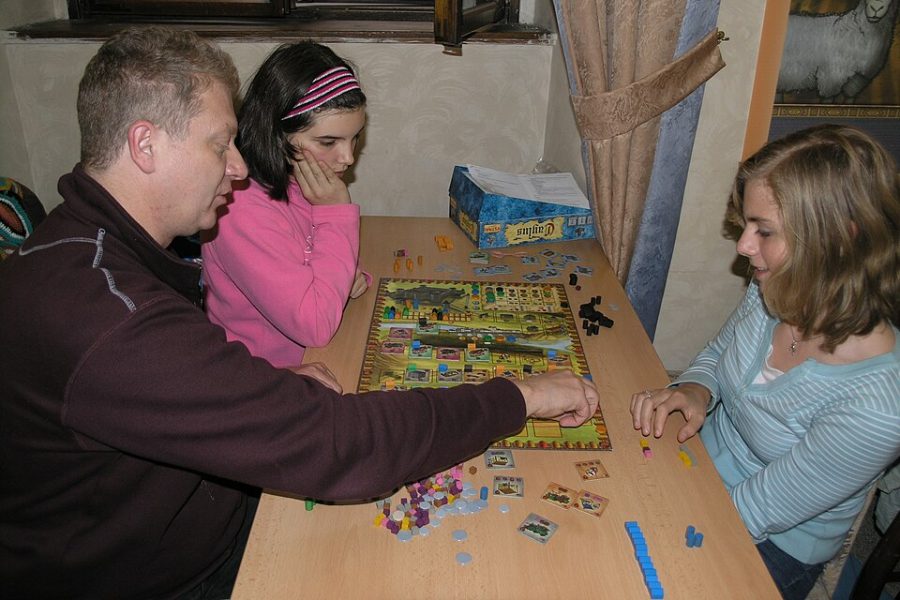
Each turn, players pay to place their workers in various buildings in the village. These buildings allow players to gather resources or money, or to build or upgrade buildings with those resources. Players can also use their resources to help build the castle itself, earning points and favors from the king, which provide larger bonuses. Building a building provides some immediate points, and potentially income throughout the game, since players receive bonuses when others use their buildings. The buildings chosen by the players have a heavy impact on the course of the game, since they determine the actions that will be available to all the players.
As new buildings are built, they stretch along a road stretching away from the castle, and not all buildings can be used every turn. Players have some control over which buildings are active by paying to influence the movement of the Provost marker. The final position of the marker is the newest building that can be used that turn. The Provost marker also helps determine the movement of the Bailiff marker, which determines the end of the game. Generally, if players are building many buildings and the Provost is generous in allowing them to be used, the game ends more quickly.
Contribute to this page
Add a resource, correct information or report a link. Every contribution is gathered here and reviewed before publication.
Suggest a videoReviewed before publication
An account is needed to suggest a change. Create an account
Correct the detailsReviewed before publication
An account is needed to suggest a change. Create an account
Suggest a correctionReviewed before publication
An account is needed to suggest a change. Create an account
Suggest rules or a player aidReviewed before publication
An account is needed to suggest a change. Create an account
A video is broken or doesn't match the right game?No account required
In the same spirit
Games that share its mechanics. Neither expansions nor other editions.


